If Child Protective Services (CPS) becomes involved with your family, one of the first documents you may hear about is a Safety Plan.
Many parents are caught off guard when they are asked to sign one. In the stress and uncertainty of a CPS investigation, it can feel like you have no choice. But before signing any document, it is important to understand what a Safety Plan is, why CPS may request one, and what it could mean for your family.
What Is a CPS Safety Plan?
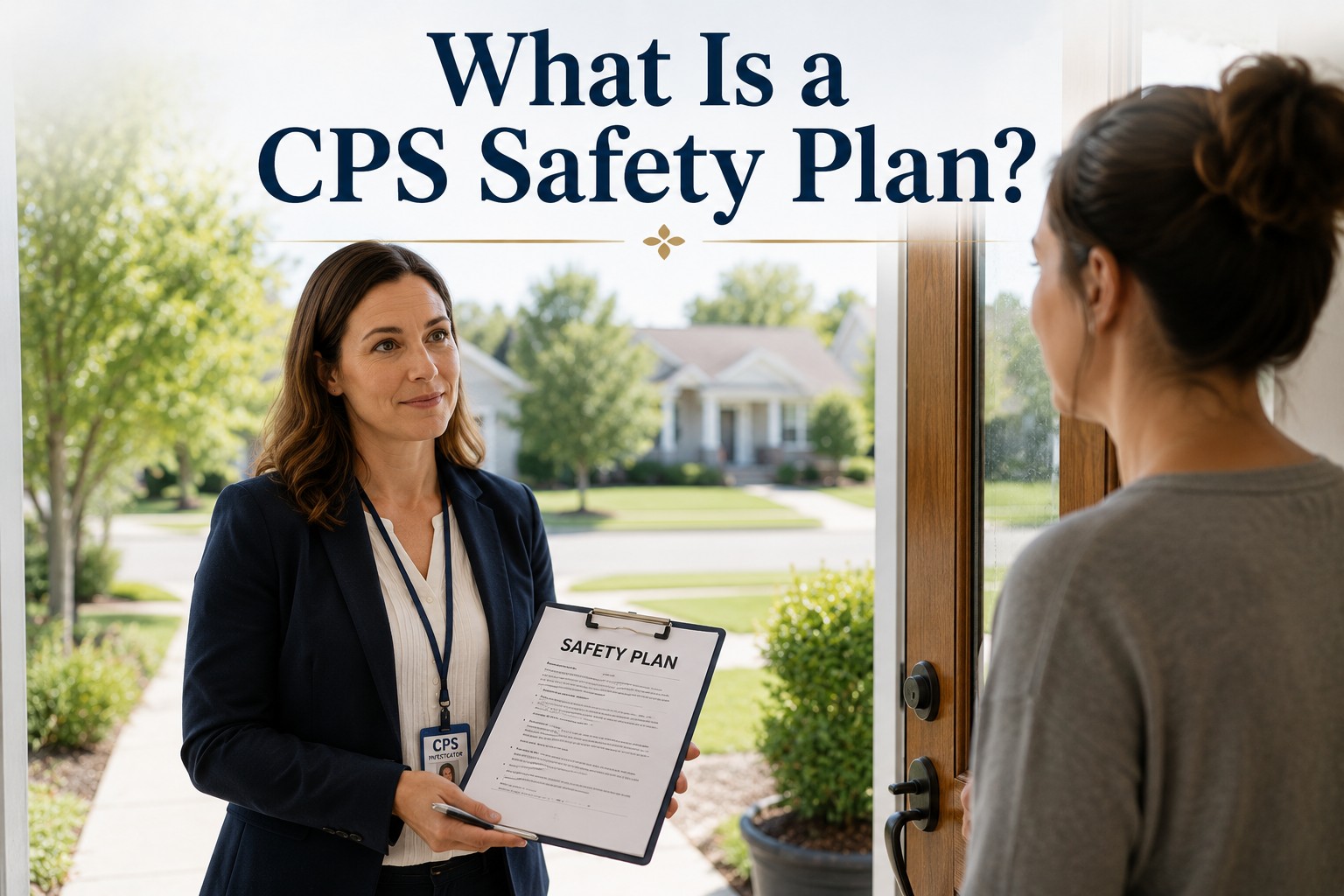
A Safety Plan is a written agreement developed by CPS that is intended to address concerns about a child’s immediate safety while an investigation is ongoing. Rather than immediately asking a court to remove a child from the home, CPS may propose a Safety Plan that outlines specific steps the family agrees to follow. The goal is to reduce perceived safety risks while allowing the investigation to continue.
What Might a Safety Plan Include?
Every case is different, but a Safety Plan may include requirements such as:
- Another adult supervising contact with the child
- A parent temporarily living somewhere else
- A relative helping care for the child
- Drug or alcohol testing
- Participation in counseling or other services
- Restrictions on who may be around the child
- Requirements to cooperate with CPS visits
Some plans last only a short period of time, while others may remain in place until the investigation progresses or the concerns are resolved.
Is a Safety Plan the Same as a Court Order?
No.
This is an important distinction. A Safety Plan is generally not a court order signed by a judge. Instead, it is typically a voluntary agreement between the family and CPS. However, that does not mean it should be taken lightly. The decisions you make during a CPS investigation can have significant consequences, and the existence of a Safety Plan may become relevant later if the case proceeds to court.
Do I Have to Sign a Safety Plan?
This is one of the most common questions parents ask. The answer depends on the specific facts of your case. While Safety Plans are generally voluntary, refusing to sign one may lead CPS to consider other options, including seeking court intervention if the agency believes a child faces an immediate risk.
For that reason, parents should avoid making quick decisions based solely on fear or pressure. Whenever possible, it is wise to speak with an experienced family law attorney before agreeing to any Safety Plan. An attorney can help you understand:
- What CPS is requesting
- Whether the proposed terms are reasonable
- How the agreement could affect your case moving forward
Read the Plan Carefully
Parents are sometimes so overwhelmed by the situation that they sign documents without fully understanding them.
Before signing anything, take the time to carefully review:
- What is required
- How long the plan will remain in effect
- Who is expected to comply
- What happens if circumstances change
If you have questions, ask them. You should understand exactly what CPS is asking you to do.
What Happens If a Safety Plan Is Not Followed?
Failure to follow a Safety Plan may cause CPS to believe that the concerns identified at the beginning of the investigation still exist—or have become more serious.
Depending on the circumstances, CPS may:
- Continue the investigation
- Modify the Safety Plan
- Recommend additional services
- Seek court involvement
Every case is different, which is why it is important to understand your obligations before agreeing to the plan.
Remember the Bigger Picture
A Safety Plan is only one part of a CPS investigation.
It does not necessarily mean:
- Your child will be removed.
- CPS has already decided what will happen.
- The investigation will end in court.
In many cases, the investigation concludes without court intervention. The important thing is to remain calm, stay informed, and make thoughtful decisions throughout the process.
What Should Parents Do?
If CPS presents you with a Safety Plan:
✔ Stay Calm
Emotions are understandable, but try not to make decisions out of panic.
✔ Read Everything Carefully
Understand every requirement before signing.
✔ Ask Questions
Do not be afraid to ask the investigator to explain any part of the agreement that you do not understand.
✔ Speak With an Attorney
Whenever possible, consult with an attorney before signing important documents related to your CPS case. Understanding your rights and responsibilities early in the process can help you make informed decisions and avoid unintended consequences.
Final Thoughts
A CPS Safety Plan is designed to address concerns about a child’s safety during an investigation, but it is also an important legal document that deserves careful consideration. If CPS asks you to sign a Safety Plan, do not assume you have to make an immediate decision without understanding what it means. Taking the time to ask questions, review the proposed terms, and seek legal advice can help you protect both your rights and your family.
Need Help With a CPS Investigation?
If CPS has contacted your family or presented you with a Safety Plan, it is important to understand your options before making significant decisions. The Grinke Stewart Law team helps parents navigate CPS investigations, explain the legal process, and protect their rights while working toward the best possible outcome for their families. Contact us at 469-598-2001 to discuss your situation.