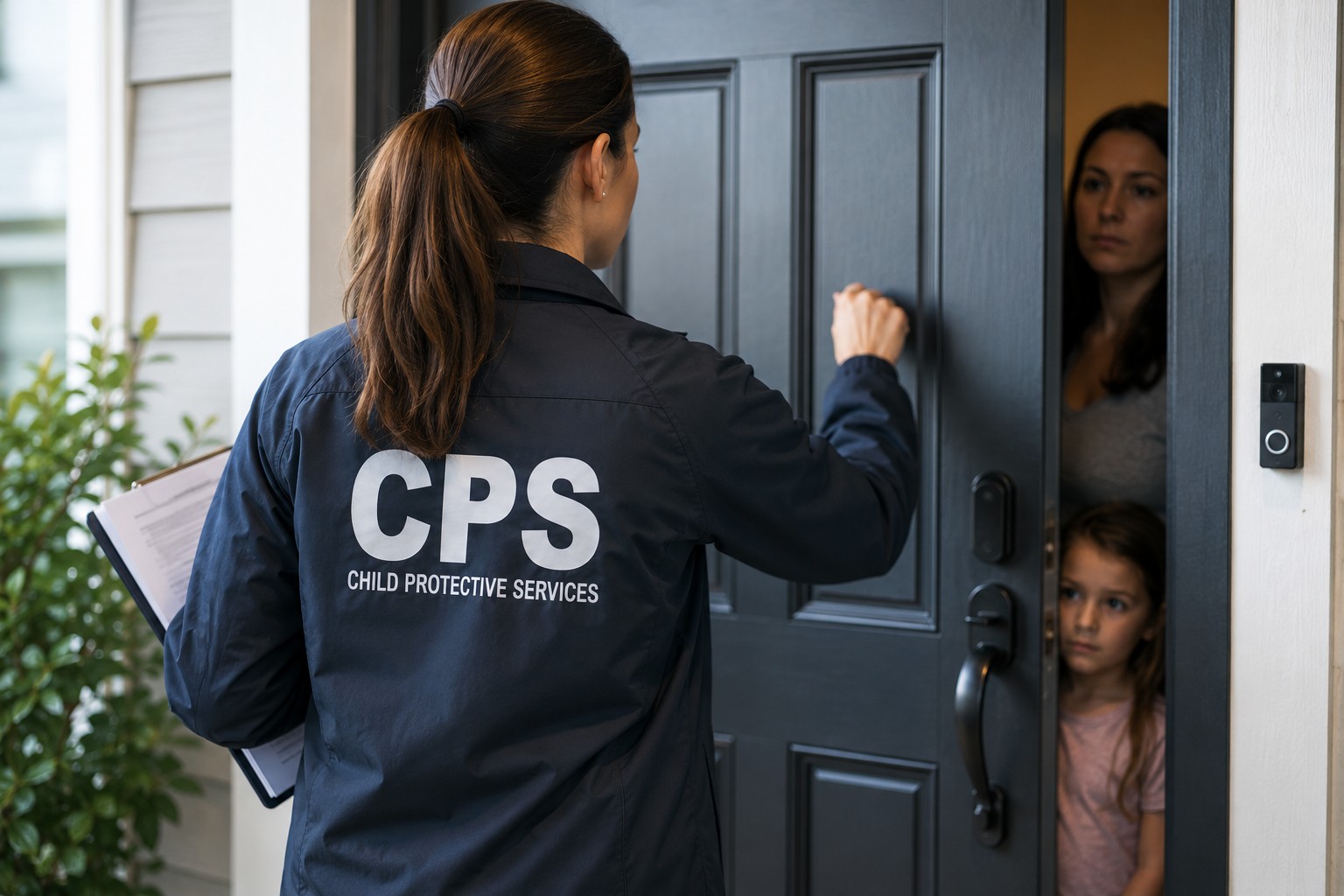
Few things are more stressful for a parent than hearing a knock at the door and learning that Child Protective Services (CPS) wants to speak with you.
For many families, the experience is immediate panic:
- “Why are they here?”
- “Can they take my children?”
- “Do I have to let them inside?”
- “What should I say?”
The situation can feel overwhelming and frightening, especially if you have never dealt with CPS before.
Here is a general overview of what usually happens when CPS first contacts a family and some important things parents should know.
First: Try Not to Panic
A CPS investigation does not automatically mean your child will be removed.
In many situations, CPS is responding to:
- A report or allegation
- Concerns raised by another person
- Information they are legally required to investigate
And importantly: Not every report is true or accurate.
Sometimes reports involve:
- Misunderstandings
- Exaggerations
- Custody disputes
- Retaliatory accusations
- Situations that do not actually rise to abuse or neglect
That does not mean the situation should be ignored, but it does mean parents should remain calm and strategic.
Why CPS May Contact You
CPS investigates allegations involving:
- Abuse
- Neglect
- Unsafe living conditions
- Drug use
- Domestic violence
- Lack of supervision
- Medical neglect
- Educational neglect
Sometimes the concerns are serious. Other times, the report may involve issues that are far less clear-cut.
What Usually Happens First
Typically, a CPS investigator will:
- Come to your home
- Ask to speak with you
- Ask about the allegations
- Want to see the children
- Possibly ask to enter the home
The investigator may appear:
- Calm and conversational
- Urgent and direct
- Friendly and reassuring
But it is important to remember: This is still an investigation.
Do You Have to Let CPS Into Your Home?
This is one of the biggest questions parents have.
In Texas, CPS generally does not have the automatic right to enter your home without:
- Your consent
- A court order
- Emergency circumstances
However, refusing entry can sometimes escalate concerns or lead CPS to seek court intervention. This is one reason why speaking with an attorney early can be extremely important. Every situation is different, and how you respond should depend on the facts of your case.
Can CPS Interview Your Children?
Yes. CPS often wants to speak with children as part of the investigation.
Depending on the circumstances, those interviews may occur:
- At home
- At school
- At another location
Parents are often surprised to learn that CPS may attempt to interview children outside the parent’s presence.
What CPS Is Usually Looking For
CPS investigations are generally focused on:
- Child safety
- Living conditions
- Supervision
- Parenting judgment
- Signs of abuse or neglect
- Whether there are immediate safety concerns
Investigators are also evaluating:
- Cooperation
- Credibility
- Consistency
- Overall family functioning
What NOT to Do
When emotions are high, parents sometimes make decisions that hurt their case.
Some common mistakes include:
❌ Panicking or becoming aggressive
Anger and hostility rarely help the situation.
❌ Lying or minimizing obvious issues
Credibility matters enormously in CPS cases.
❌ Coaching children on what to say
This can create significant problems if discovered.
❌ Posting about the investigation on social media
Public posts can easily make situations worse.
❌ Assuming cooperation means you do not need legal advice
Even cooperative parents often benefit from understanding their rights and options.
What You SHOULD Do
✅ Stay Calm
Easier said than done — but extremely important.
✅ Be Respectful
You do not have to be confrontational to protect yourself.
✅ Listen Carefully
Pay attention to:
- What allegations are being made
- What CPS is requesting
- What concerns are being raised
✅ Contact an Attorney Early
One of the biggest mistakes parents make is waiting too long to get legal guidance.
An attorney can help you:
- Understand the process
- Evaluate risks
- Respond strategically
- Avoid common mistakes
Can CPS Remove Your Children Immediately?
In some emergency situations, yes.
However, removal is generally considered a serious step and usually requires:
- Immediate safety concerns
- Evidence of danger or risk
Not every investigation leads to removal.
In many cases, CPS may instead:
- Continue investigating
- Recommend services
- Create a safety plan
- Close the case without further action
The Emotional Reality of CPS Investigations
Even when allegations are unfounded, CPS investigations can feel deeply personal and emotionally exhausting.
Parents often experience:
- Fear
- Shame
- Anxiety
- Embarrassment
- Anger
- Confusion
The uncertainty alone can be overwhelming.
That is why having good information and experienced guidance matters.
Final Thoughts
If CPS shows up at your door, the most important thing you can do is remain calm and avoid reacting emotionally.
Do not assume the worst, but also do not assume the situation is minor.
How parents respond early in a CPS investigation can significantly impact how the case develops moving forward.
Need Help With a CPS Investigation?
If your family is involved with CPS, it is important to understand your rights, your options, and the potential risks involved.
Our team at Grinke Stewart Law helps parents navigate CPS investigations and related family law issues with clear guidance and strategic representation. Contact us at 469-598-2001 to discuss your situation.